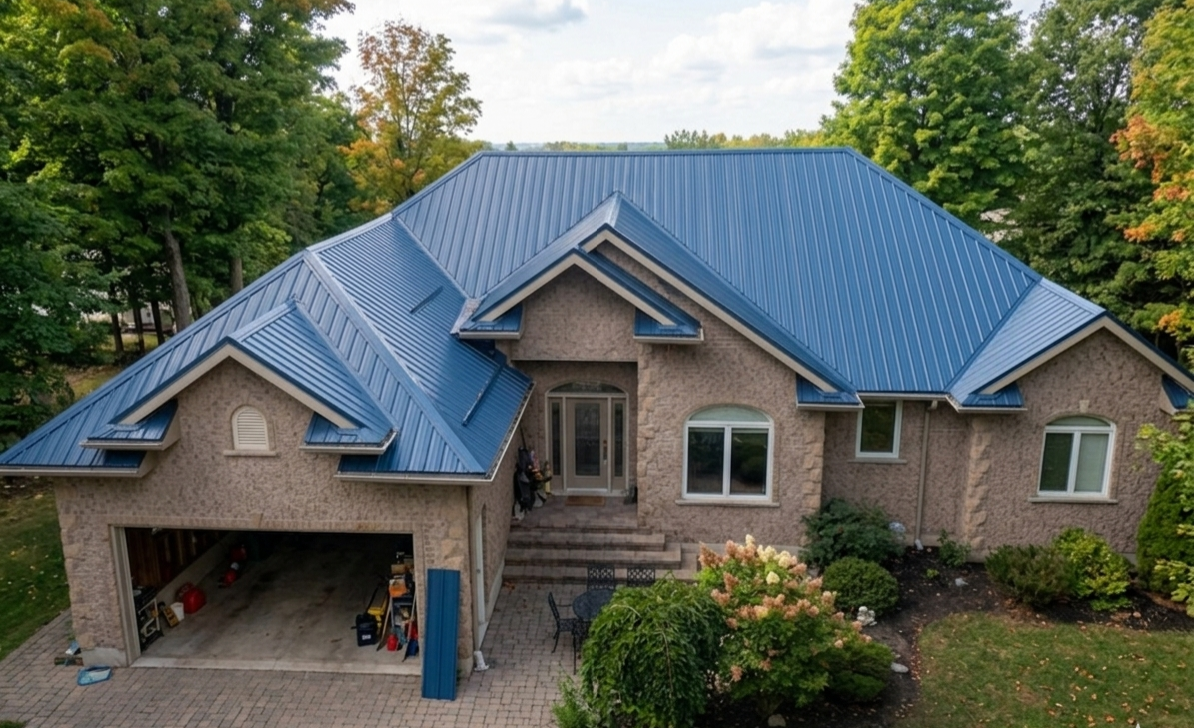
Large estate home
Kawartha Lakes · Nearby projects · case by case
705-761-8318
Metal roofing service · Kawartha Lakes
Bulger reviews steel and metal roofing for Kawartha Lakes homes, cottages, and custom builds. A metal roof is not a complete specification: a useful scope names the proposed material, profile, fastening approach, roof conditions, and finish instead of treating every metal roof as interchangeable.
Steel and metal roofing quote request
You do not need to know the final panel profile before reaching out. Share the property, timing, roof conditions, and the look you are considering so the useful open questions can be identified.
Metal roofing request
Send the location, timing, known roof conditions, and any profile or finish direction you are considering. Photos or plans can be emailed after you send the basics.
Quote requests are sent through the site notification workflow. Urgent or weather-sensitive work should still be called in directly.
Real Bulger project records
These project records show observable roof forms, colours, panel fields, and finished details. Each record is evidence from that project—not a blanket fit or performance claim.

Large estate home
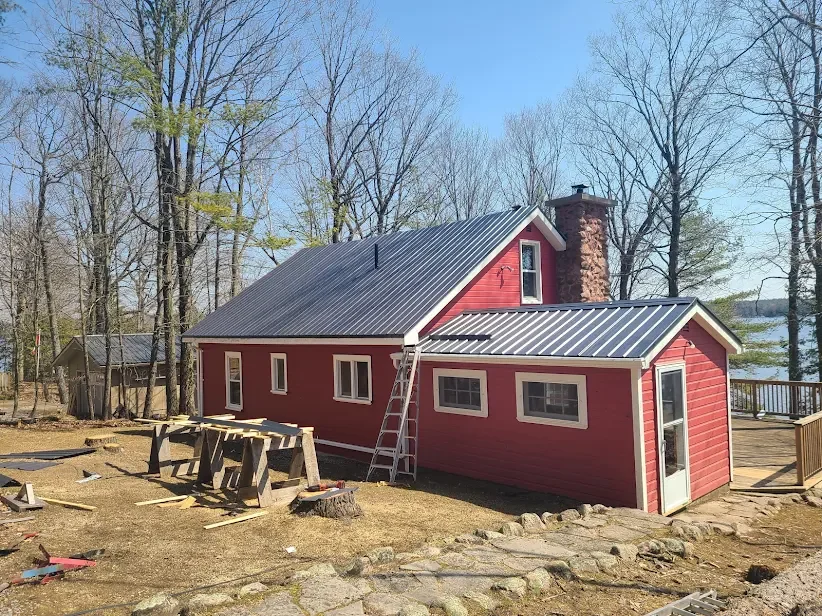
Lakehouse roof
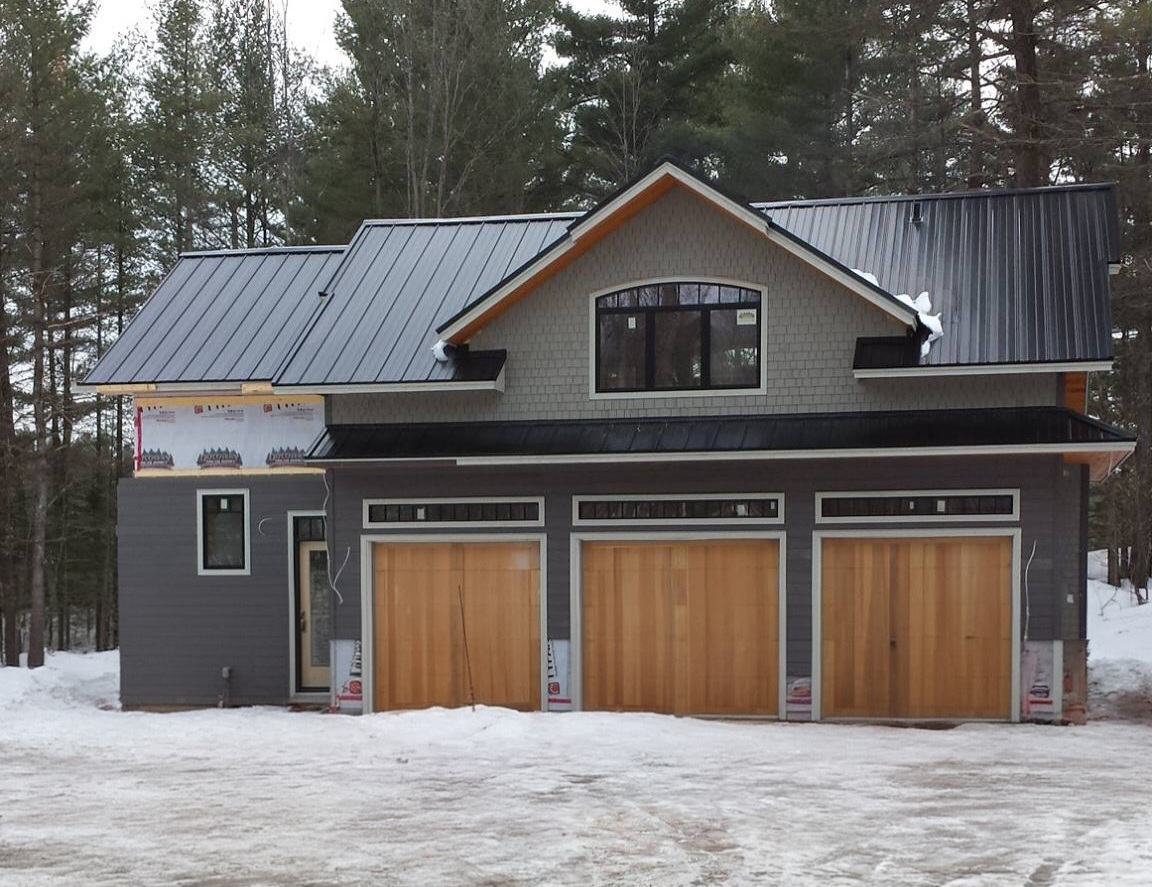
Garage-home residential builds
The useful distinction
The material alone does not define the panel profile, seam, fastening method, coating, trim, underlayment, ventilation approach, or roof details.
Standing seam is one recognizable path. Any other profile or product should be named in the proposed scope before it is compared, priced, or selected.
Compare the standing seam system ↗Compare the actual proposal
Homes, cottages, custom builds, and existing roofs do not start from the same assembly or sequencing assumptions. The written proposal should identify the path being priced.
Raised seams and concealed fastening create a distinct finished panel field. Fit still depends on the specified system and the roof details.
Panel shape and fastening details can differ. Confirm the exact product and attachment method proposed for the project rather than relying on the label “metal roof.”
A new build starts with plans and sequencing. A replacement starts with the current assembly, tear-off boundaries, and conditions that may remain hidden until removal.
Fit before finish
These are not remote approval rules. They are the questions that make an initial review less generic.
Plane length, valleys, dormers, lower roofs, wall intersections, and penetrations change the detailing conversation.
A new build starts with plans. A replacement starts with what is visible now and what may only be known after removal.
“Metal roof” is not a complete specification. Ask what profile, seam or fastening approach is actually proposed.
Compare current physical samples and installed examples. A screen preview is useful direction, not final colour proof.
Roof conditions and finish
Drainage, snow movement, exposure, and seasonal temperature change affect the roof as a system. The useful question is how the proposed panels, fastening, flashings, ventilation, and discharge points respond to this roof—not whether metal is universally “best.”
Use colour previews to narrow direction, not approve a finish. Compare current physical samples and, where possible, installed examples before confirming colour and finish.

Cost without fake pricing
A roof price cannot be responsibly reduced to one website number without the roof, product, scope, and conditions. These factors usually change the work being priced:
How a quote starts
The form starts the conversation; it does not turn incomplete roof information into an instant specification or price.
Share the location, property type, roof details, photos or plans if available, and timing.
Bulger reviews the information and identifies what still needs clarification about the roof, access, or proposed system.
A site visit may still be needed before final scope, especially when geometry, access, deck condition, or the existing assembly is unclear.
Before comparing totals
A useful proposal lets you compare the actual roof work—not just the bottom-line number. Confirm these items in writing and flag anything that remains an allowance, assumption, or open question.
Use the roofing quote comparison guide ↗Panel profile, seam or fastening approach, metal and finish, and the product documents that define the proposed system.
Whether removal is included, what is assumed about the deck, and how hidden or damaged conditions would be handled if found.
Underlayment, ventilation, insulation or condensation-control considerations, and the boundaries of the proposed roof assembly.
Valleys, eaves, rakes, walls, penetrations, transitions, drainage points, and any snow-management questions that apply to the property.
Staging, material handling, cleanup, exclusions, and the site conditions that could change timing or scope.
Which product and workmanship documents apply, who is responsible for each scope item, and which questions still need confirmation.
Questions worth asking
A specific answer should name the proposed system and the roof conditions behind it.
Steel roofing belongs within the broader metal roofing category. The useful comparison is the exact material, panel profile, fastening approach, finish, and roof assembly being proposed.
Standing seam is one metal roofing system. It uses raised seams and concealed fastening in the finished field. Other profiles use different shapes and attachment details.
Sometimes, but not as a blanket rule. Existing material condition, the deck, ventilation, applicable requirements, and the specified system all need review. Full removal may be the better approach on some roofs.
Photos and plans can make the first review more useful. A final scope may still require an on-site look, especially when access, deck condition, roof geometry, or the existing assembly is unclear.
It should identify the material, panel profile, fastening approach, finish, trim and flashing scope, underlayment or assembly layers, removal assumptions, access boundaries, and any open conditions that could change the work.
Use screen previews to narrow the direction, then compare current physical samples and installed examples where possible. Lighting, surroundings, screen settings, and product batches can change how a finish appears.
Send the property location, roof photos or plans, known roof issues, desired timing, and any profile or finish direction you are considering. Bulger can then identify what is missing before a roof-specific scope is prepared.
Next step
Use the form for the property location, roof conditions, and timing. Email photos or plans directly to rob@bulgersteelroofing.com if they add useful context.